

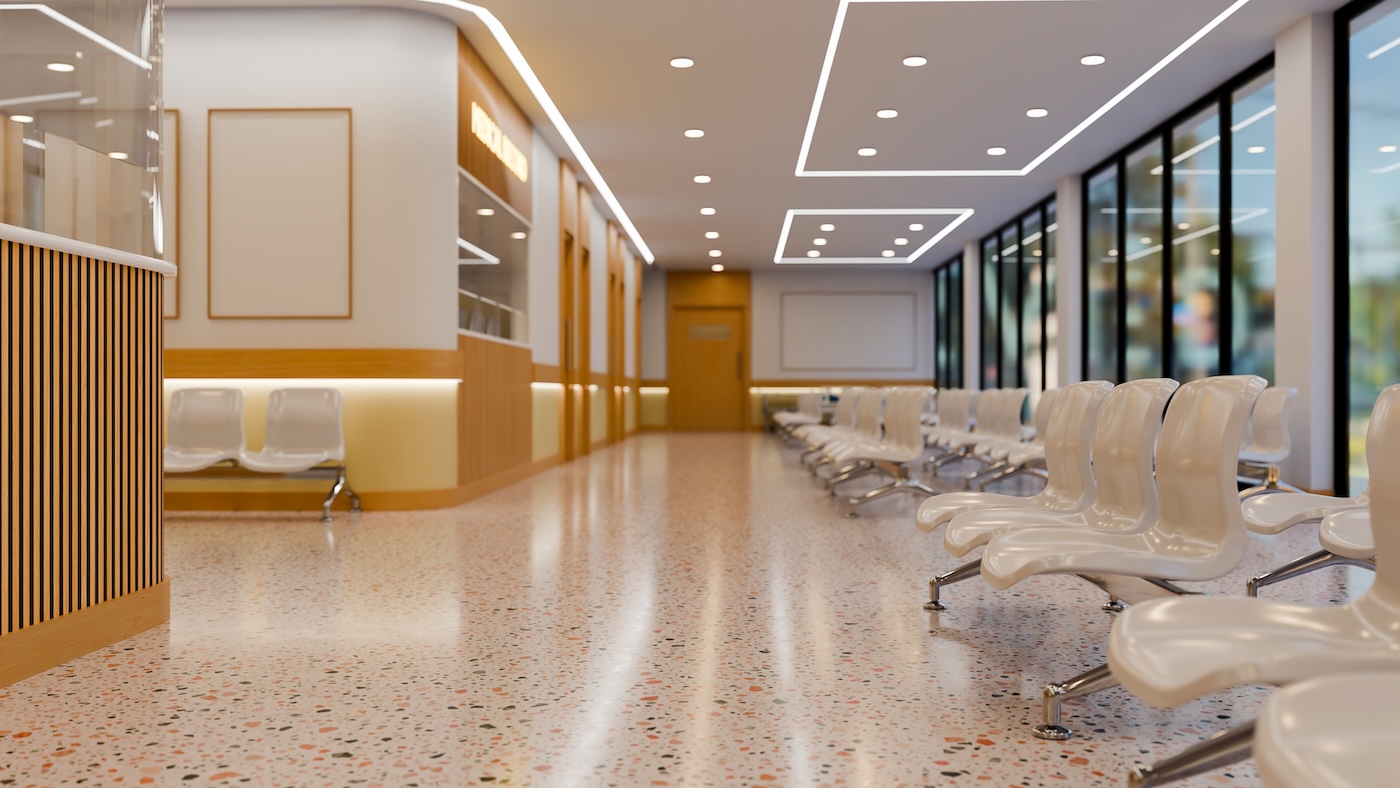
For most of the last century, the waiting room has been the most predictable part of American medicine. Vinyl chairs against the wall. A clipboard with the same eight questions you answered last year. A television nobody is interested in. And time, a lot of it, spent wondering whether you have been forgotten.
That room is finally changing. Not because anyone fell in love with technology for its own sake, but because health systems are under real pressure: staffing shortages, burned-out clinicians, patients who compare their doctor’s office to every other service they use on their phone.
Artificial intelligence, clinical robotics and a new generation of facility design are reshaping what happens before, during and after a visit.
The visit starts before you arrive
The biggest shift is that much of the waiting room has moved onto your phone.
Digital intake lets you complete registration, insurance verification, consent forms and medical history from your couch the night before. Practices that use it well pre-fill everything already in your chart, so you are confirming information rather than rewriting it.
AI is also changing how appointments get made. Scheduling tools can now interpret a patient’s description of a problem and route it to the right type of visit: an in-person appointment, a video consult, a nurse call, or a same-day slot that a cancellation just opened.
Some systems predict which appointments are likely to be missed and offer those patients extra reminders or transportation help. That matters more than it sounds. No-shows are one of the quiet drivers of long waits for everyone else.
Then there is the virtual waiting room. Instead of arriving 20 minutes early to sit under fluorescent lights, you check in from your car or from home and get a text when the exam room is genuinely ready. Health systems adopted this out of necessity during the pandemic and kept it because patients preferred it.
AI in the exam room, mostly behind the scenes
The AI patients are most likely to notice is the kind that gives their physician’s attention back.
Ambient documentation tools listen to the visit, with your permission, and draft the clinical note, orders and after-visit summary. The doctor reviews and signs off.
Physicians using these tools consistently report spending less time typing during the appointment and less time finishing charts at night, which is a meaningful dent in one of the main causes of clinician burnout.
For patients, the effect is simple: more eye contact, fewer interruptions, a conversation instead of a data-entry session.
Other AI runs further in the background:
- Decision support that flags a drug interaction, a missing screening or a lab trend that deserves a second look.
- Imaging support that highlights suspicious regions on a mammogram, chest CT or retinal scan for a radiologist or ophthalmologist to confirm. The FDA has now cleared well over a thousand AI-enabled devices, most of them in imaging.
- Population health tools that identify which patients with diabetes or hypertension have drifted out of control and need outreach, rather than waiting for them to schedule something.
- Inbox triage that sorts patient messages and drafts replies for a nurse or physician to edit, which is increasingly necessary given how much the volume of portal messages has grown.
The important thing to understand about all of this is that it is assistive. These tools draft, flag and suggest. A licensed clinician decides. Any practice deploying them should be able to tell you exactly where the human review step sits, and a good one will tell you without being asked.
Robots are real, but they are not what the movies promised
Hospital robotics in 2026 is a story about logistics and infection control far more than about androids in scrubs.
Delivery robots now shuttle medications, linens, lab specimens and meal trays through hospital corridors, riding elevators and navigating around people. A single unit can save nursing staff miles of walking per shift, time that goes back to bedside care.
UV disinfection robots move through operating rooms and patient rooms between cases, adding a layer of pathogen reduction on top of manual cleaning.
Surgical robotics is the most mature category. Robot-assisted systems have been used in millions of procedures across urology, gynecology, general and thoracic surgery. The surgeon is operating the instruments the entire time. The benefit is precision, tremor filtration, better visualization and, in many procedures, smaller incisions and faster recovery.
Rehabilitation and mobility robotics, including exoskeletons and robotic gait trainers, are helping patients recovering from stroke or spinal cord injury complete far more repetitions of a movement than a therapist could physically deliver alone.
Pharmacy automation fills and verifies high volumes of prescriptions with a level of consistency that reduces dispensing errors.
What you are unlikely to meet is a robot providing your care. The tasks being automated are the repetitive, physically demanding and hazardous ones. The relational work stays human, partly by design and partly because nobody has found a substitute for it.
Smart design: the part nobody photographs
The least discussed change may be the most immediately felt. Architects and health systems have absorbed a couple of decades of evidence-based design research, and it is showing up in new construction and renovations.
Some of what that research supports:
- Access to daylight and views of nature is associated with shorter stays, lower reported pain and less anxiety. Hence the courtyards, larger windows and garden views in newer facilities.
- Single-patient rooms reduce transmission of infection and improve sleep and privacy. They are now the default in new hospital construction.
- Noise reduction through sound-absorbing surfaces, quieter alarm design and decentralized nurse stations. Hospital noise routinely exceeds recommended levels, and poor sleep slows healing.
- Smaller, decentralized waiting areas with varied seating instead of one large room of rows. Families cluster differently than solo patients, and people waiting for a cancer consult should not be seated shoulder to shoulder with a crowd.
- Intuitive way-finding, including digital signage and app-based indoor navigation, because getting lost in a medical center is a genuine source of stress and late arrivals.
- Flexible, standardized exam rooms that can be reconfigured as care models change, with furniture arranged so the clinician and patient can look at the screen together rather than the clinician turning away.
Put these together and the “waiting room” starts to dissolve as a distinct space. In some newer clinics patients go directly from the door to an exam room, and the care team comes to them.
What the future actually looks like
The waiting room of the future is less a room than an absence of one. You complete your paperwork at home, you arrive when the team is ready, you sit in a space with natural light and reasonable acoustics, and your physician spends the visit looking at you because software is handling the note.
Behind the walls, robots carry the supplies and the algorithms watch for the things humans miss.
None of it replaces the reason you came. The value of a visit still rests on a clinician who listens carefully, thinks clearly and tells you the truth. The best use of all this technology is to clear away everything that was getting in the way of that conversation.