

Original Source: WSMV
By Brendan Tierney
NASHVILLE, Tenn. — Research shows people of color are much healthier when they have a doctor who looks like them. But only around 6% of all doctors in the United States are Black, well below the 13% of the population.
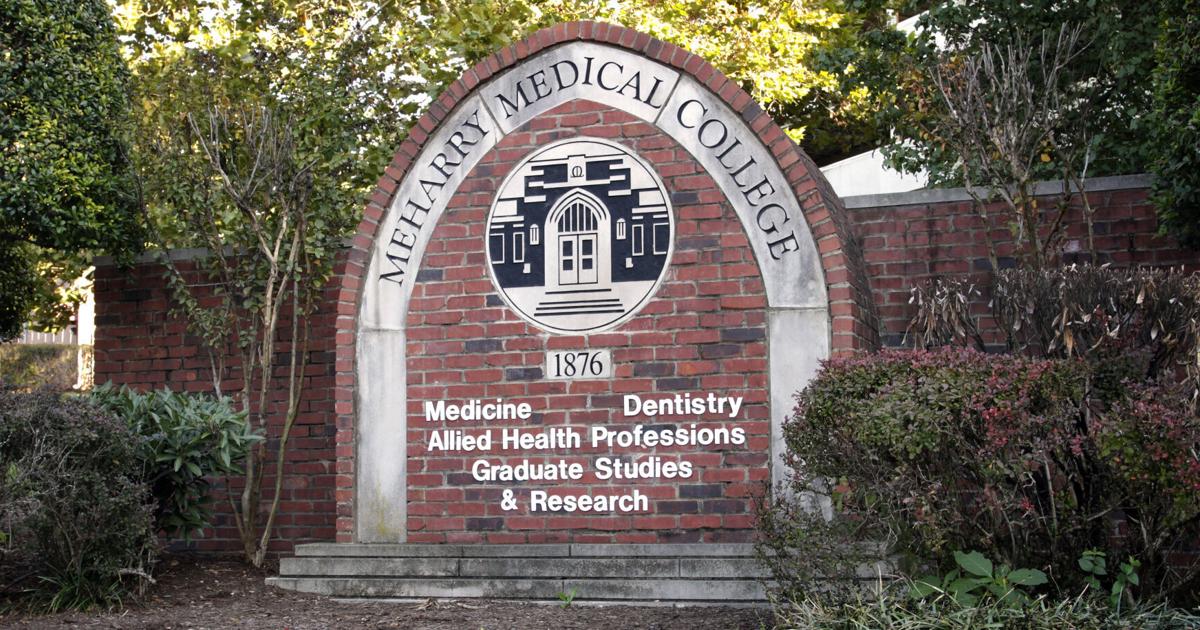
One Nashville institution has been working to fix this imbalance across the country for more than 150 years.
Student finds path to medicine
David Stewart is learning what it takes to become a surgeon as a third-year student at one of the first medical schools in the country that accepted Black people.
“At Meharry, you really have the capacity to become whatever it is that you really put your mind to,” Stewart said.
Simply walking into the cafeteria at Meharry Medical College shows the community he’s created in the heart of Nashville. David didn’t have access to STEM programs growing up and only realized someone who looked like him could be a doctor after he got hurt playing football.
“I kind of thought to myself, ‘Why not? Why not give it a try?’” Stewart said. “I really want to make sure that I have the opportunity to really help people in the ways that I’ve been helped.”
Stewart understands the importance of representation in healthcare and is committed to carrying on the Meharry legacy after completing residency.
“When you’re treated by someone who looks like you, you have improvements in terms of your healthcare, in terms of your medication adherence. I think that there’s just this ability for you to be able to have a better connection with people who look like you,” he said.
Legacy spans generations nationwide
Meharry has been inspiring Black people like Stewart to get into medicine for more than 150 years, creating generations of doctors, pharmacists and dentists.
The impact of Meharry has been felt in communities across the country and especially in New Orleans.
“Pictures do tell a thousand stories,” said Dr. Marcellus Grace, who helped curate a first-of-its-kind exhibit at the New Orleans Pharmacy Museum focused on the history of Black doctors and pharmacists.
Grace grew up in Selma, Alabama, where Meharry’s influence was clear.
“I don’t think anyone growing up in the Deep South like I did, and I was born in 1947, growing up in very southern rural Alabama, Selma, Alabama, didn’t know about Meharry,” Grace said. “We had one black doctor and one black dentist. You would go in the office, I remember seeing their Meharry medical certificates on the wall.”
Dr. Grace said the South would be a very different place without the people featured in the exhibit who pushed to make sure everyone had equal medical care through the Jim Crow era.
“In spite of the history of slavery and the struggles that African-Americans have had to go through, they hungered to get the training to take care of their own people. That was the whole emphasis of Meharry. That after the Civil War, there was a need for black doctors to take care of black patients, and black pharmacists to take care of black patients,” Grace said.
Modern leadership
Dr. James Hildreth has been president of Meharry for more than a decade, pushing for more technology and opening new doors for students that they might not get at other schools.
“We’ve been blessed to have outstanding faculty and clinicians at Meharry for a really long time,” Hildreth said.
Hildreth said Meharry accepts students that other schools might overlook, and then sends them to those same top programs that had rejected them every year for residency training.
“We tend to accept students that other medical schools and dental schools might not think are viable candidates to be in their programs,” Hildreth said. “But those same medical schools are now bringing them as residents. What that means is there’s a lot more to becoming a great physician than being smart.”
Hildreth said Meharry’s role is still significant in terms of bringing diversity to the healthcare field. Meharry is now focused on increasing diversity in physician assistants and other specialties.
“If you took us out of the picture, the profile of the healthcare workforce in the United States would be very different,” he said.